Quick Answer
Not every tick bite makes you ill, but some can, depending on where you are in the world. A vaccine is available for tick-borne encephalitis, which is found across parts of central, eastern and northern Europe and parts of Asia, and it is usually recommended for travellers who will spend time outdoors in risk areas during tick season. There is no vaccine for Lyme disease and most other tick-borne infections available to UK travellers, so covering up, using repellent, checking your skin and removing ticks promptly remain essential. A travel health consultation can tell you whether vaccination makes sense for your itinerary.
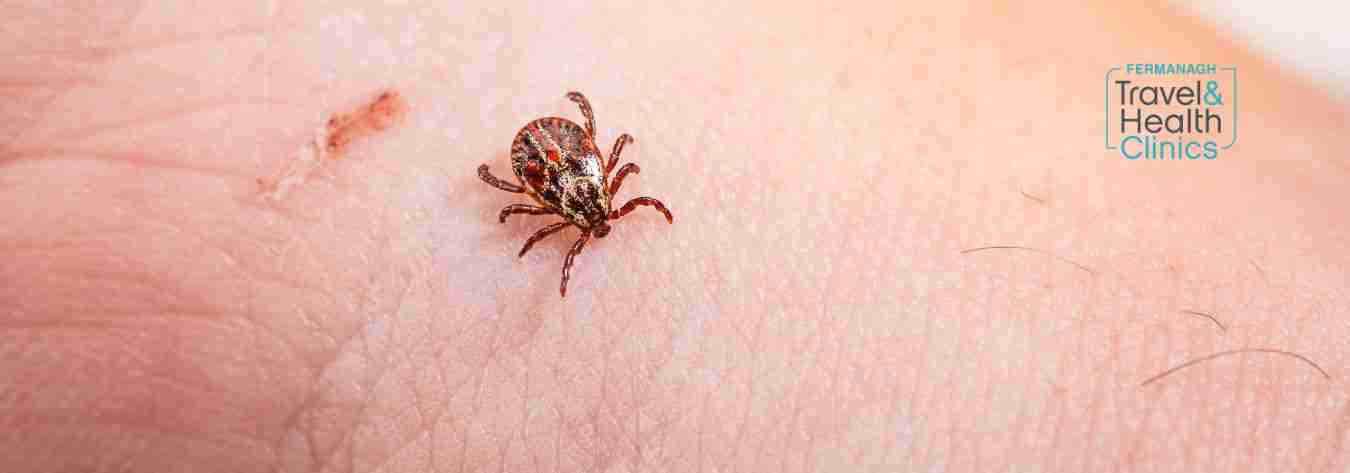
A tick can be as small as a poppy seed, and most people never feel it attach. That is part of what makes a tick bite abroad so easy to underestimate. Many bites cause no harm at all, but ticks in some parts of the world carry infections that can cause serious illness, including Lyme disease and tick-borne encephalitis (TBE). Whether you get sick depends on where you are, the type of tick, how long it was attached and, for some infections, whether you have been vaccinated. If you are planning walking, camping, cycling or time in the countryside overseas, it is worth understanding the risk before you pack.
Book a travel health consultation to find out whether you need tick-borne encephalitis vaccination for your destination.
Alternatively, read on to learn which infections ticks can spread, where the risk is highest, which vaccines can help and what to do if you find a tick on your skin.
1. Will I Actually Get Sick from a Tick Bite Abroad?
The honest answer is: probably not, but it depends. Ticks are only dangerous if they are carrying an infection, and not all of them do. The proportion that carry disease varies enormously between regions, species and even individual woodlands, so it is not possible to give a single risk figure that applies everywhere. What can be said is that the chance of becoming ill rises when you spend more time in tick habitat, when you travel in the warmer months and when you are less likely to notice or remove a tick quickly.
It also matters which infection we are talking about. Lyme disease, caused by Borrelia bacteria, generally needs a tick to remain attached for a prolonged period before the bacteria are passed on, which is why prompt removal helps. Tick-borne encephalitis, caused by a virus, can be transmitted much more quickly because the virus can be present in the tick’s saliva. This is a key reason why vaccination, rather than relying on spotting and removing ticks alone, is recommended for TBE in higher risk situations.
Ticks live in long grass, scrub, leaf litter and the edges of woodland, and they climb onto passing animals and people. They do not jump or fly. They attach in warm, moist, hidden places, which is why bites often go unnoticed behind the knees, in the groin, around the waistband, in the armpits, behind the ears and on the scalp, especially in children.
2. Which Illnesses Can Ticks Spread Abroad?
Several different infections are spread by ticks, and the ones you are most likely to meet depend on your destination. The list below covers the main ones UK travellers are advised to know about.
-
- ⇾ Tick-borne encephalitis (TBE): A viral infection that can affect the brain and nervous system. It is the main tick-borne infection for which a vaccine is available to travellers, and it is the focus of this guide
- ⇾ Lyme disease: A bacterial infection that occurs in many temperate parts of the world, including the UK, Europe, North America and parts of Asia. It often begins with an expanding skin rash and flu-like symptoms, and is usually treated successfully with antibiotics when caught early. No Lyme disease vaccine is currently available to UK travellers, so prevention depends on bite avoidance and prompt tick removal
- ⇾ Spotted fever group rickettsioses: Including Mediterranean spotted fever, African tick bite fever and Rocky Mountain spotted fever. These cause fever, headache and often a rash, and are linked to specific regions such as southern Europe, southern Africa and the Americas
- ⇾ Crimean-Congo haemorrhagic fever (CCHF): A viral infection found in parts of Africa, the Middle East, Central Asia and south-eastern Europe. It is uncommon in travellers, but is a reason to be especially careful around livestock and rural areas in affected regions
- ⇾ Anaplasmosis, babesiosis and Powassan virus: Found mainly in North America, particularly in wooded and rural north-eastern and upper Midwest areas
- ⇾ Tick-borne relapsing fever and tularaemia: Less common, but recognised in certain regions, often linked to rural accommodation or contact with wild animals
Most of these have no vaccine available to UK travellers, which is why a good understanding of bite avoidance, including the steps in our guide to choosing an insect repellent, is just as important as vaccination. Our article on insect bites in the UK versus abroad explains how the risks compare.
3. Tick-Borne Encephalitis: The Infection You Can Be Vaccinated Against
Tick-borne encephalitis is caused by a flavivirus and is found across large parts of central, eastern and northern Europe, as well as Russia and parts of northern and eastern Asia, including areas of China, Japan, South Korea and Mongolia. Europe’s disease control agency, the European Centre for Disease Prevention and Control (ECDC), publishes up to date information on where TBE occurs.
TBE typically follows a two-stage course. In the first stage, which appears around one to two weeks after the bite for many people, symptoms resemble flu, with fever, tiredness, headache and muscle aches. Some people recover at this point. In others, after a short symptom-free period, a second stage develops in which the virus affects the brain or the lining around it. This can cause severe headache, a stiff neck, confusion, drowsiness, difficulty with balance or movement and, in some cases, longer-term neurological problems. Severity varies, and older adults tend to be affected more seriously than children.
There is no specific antiviral treatment for TBE. Care is supportive, which is why prevention matters so much. Occasionally the virus is also acquired by drinking unpasteurised milk or eating unpasteurised dairy products from infected animals, so it is sensible to avoid these in affected regions.
-
- ⇾ Season: Risk is generally highest from spring to autumn, when ticks are most active, although this varies with local weather
- ⇾ Habitat: Forest edges, meadows, riverbanks, scrubland and areas with dense undergrowth are typical
- ⇾ Not just wilderness: Parks, gardens and rural villages in affected countries can also harbour infected ticks
- ⇾ Not a short-lived risk: Because the virus can be passed on quickly after a bite, removing the tick promptly reduces risk for some infections but does not reliably protect against TBE
4. Who Should Consider the Tick-Borne Encephalitis Vaccine?
The TBE vaccine is not given routinely to every traveller. It is usually recommended where you are visiting a country or region with TBE risk, during the tick season, and your activities involve a real chance of exposure. Current country information is available from TravelHealthPro, and a clinician will apply it to your exact plans.
-
- ⇾ Hikers, walkers and trail runners: Especially where routes pass through forest, scrub or long grass
- ⇾ Campers and bikepackers: Sleeping outdoors or stopping in rural areas increases exposure
- ⇾ Cyclists and mountain bikers: Off-road routes often brush through vegetation
- ⇾ Foragers and fishers: Picking berries or mushrooms, or fishing in riverside undergrowth, brings contact with tick habitat
- ⇾ People working outdoors abroad: Including forestry, farming, conservation and field research
- ⇾ Longer stays and repeat visitors: More days outdoors means more opportunity for exposure
- ⇾ Families visiting relatives in rural areas: Children often play in gardens, hedges and woodland, so it is worth asking about suitable options. See our guide to children’s travel vaccines
- ⇾ Older travellers: Older adults may develop more severe disease if infected, so they are often a priority for discussion
A short city break with no countryside time carries a much lower risk than a week’s hiking in the same country. This is why a consultation looks at your itinerary, accommodation and activities rather than simply your destination.
Tick-Borne Risks by Region at a Glance
The table below is a general overview only. Risk varies within countries as well as between them, so use it as a starting point and confirm the position for your own trip.
| Region | Main Tick-Borne Risks | Vaccine Available to UK Travellers? |
|---|---|---|
| Central, eastern and northern Europe | TBE, Lyme disease | TBE: yes. Lyme disease: no |
| Russia, Siberia, parts of China, Japan, South Korea and Mongolia | TBE, Lyme disease | TBE: yes. Lyme disease: no |
| North America | Lyme disease, anaplasmosis, babesiosis, Rocky Mountain spotted fever, Powassan virus | No |
| Mediterranean, southern Europe and North Africa | Mediterranean spotted fever, CCHF in some areas | No |
| Southern and eastern Africa (including safari areas) | African tick bite fever, CCHF in some areas | No |
| Central and South America | Spotted fever group rickettsioses | No |
| Middle East and Central Asia | CCHF, tick-borne relapsing fever | No |
5. How the TBE Vaccine Works and What the Schedule Looks Like
The TBE vaccine does not contain live virus, so it cannot give you the infection. It is given as an injection into the upper arm, and protection builds over several doses. More than one vaccine product exists, and the exact timing, age ranges and booster intervals depend on the product used, so the schedule below is a guide for discussion rather than a fixed rule.
| Schedule | Typical Timing | When It Is Often Used |
|---|---|---|
| Standard | First dose, second dose one to three months later, third dose around five to twelve months after the second | When you have several months before you travel |
| Rapid | First dose, second dose around two to four weeks later, third dose around five to twelve months after the second | When you travel in a few weeks and want protection sooner |
| Boosters | Usually after about three years, then at longer intervals depending on the product and your age | When you continue to be at risk of exposure |
-
- ⇾ Protection does not appear instantly, so earlier is better. It is best to complete at least the first two doses before you enter a risk area
- ⇾ A full course gives the longest-lasting protection, and a booster keeps this going if you continue to travel to risk areas
- ⇾ If you started a course elsewhere, bring any records so your clinician can work out the next step rather than starting again unnecessarily
- ⇾ Common side effects are a sore arm, headache, tiredness or a mild temperature for a day or two. Serious allergic reactions are very rare
- ⇾ Tell us about any severe allergies, recent illness with a high temperature, pregnancy or breastfeeding, and any medicines that affect your immune system, as these can change the advice
6. Other Vaccines to Think About Alongside TBE
If you are heading to the countryside abroad, TBE is rarely the only health consideration. Planning everything in one go saves time and avoids leaving things too late. Depending on your destination, you may also want to discuss:
-
- ⇾ Japanese encephalitis: Another brain infection caused by a related virus, but spread by mosquitoes in rural parts of Asia. The two vaccines are separate, and one does not protect against the other. See our Japanese encephalitis vaccine page
- ⇾ Rabies: Relevant if you may encounter dogs, bats or wild animals in rural areas. Read about the rabies vaccine and rabies prevention shots
- ⇾ Hepatitis A and typhoid: Often considered for rural or lower-sanitation destinations. See our hepatitis A and typhoid blogs
- ⇾ Hepatitis B: May be worth considering for longer stays or where medical treatment might be needed. See our guide to shots for hepatitis B
- ⇾ Yellow fever: Required or recommended for parts of Africa and South America. See our yellow fever vaccine page
- ⇾ Malaria prevention: Needed in many tropical destinations where ticks are also a concern. Read our malaria prevention guide
- ⇾ Cholera: Considered in some higher risk situations. See our cholera vaccine page
For a wider overview of what your trip may need, see our pages on our travel vaccine clinic and travel vaccines near you. If your trip is soon, read our advice on last-minute travel vaccinations.
Use our widget to see what other vaccines might be a good fit for your travel plans:
7. Preventing Tick Bites: What to Do Alongside Vaccination
Because most tick-borne infections cannot be vaccinated against, bite avoidance is the foundation of protection, and it also adds a second layer of defence for TBE. The following steps are widely recommended.
-
- ⇾ Cover up: Wear long trousers tucked into socks and long sleeves when walking through vegetation, ideally in light colours so ticks are easier to spot
- ⇾ Use repellent: Apply an effective repellent containing DEET or icaridin to exposed skin and clothing edges, following the product directions
- ⇾ Treat clothing: Permethrin-treated clothing and gear can add useful protection for longer or higher risk trips, and it should be applied to fabric, never to skin
- ⇾ Stay on paths: Avoid brushing against long grass and undergrowth where practical, and avoid sitting directly on the ground in leaf litter
- ⇾ Check your whole body: After every outdoor trip, check your skin carefully, including the groin, armpits, behind the knees, around the waistband, behind the ears and along the hairline. Check children’s scalps and ask someone to check places you cannot see
- ⇾ Check clothes, bags and pets: Ticks can hitch a ride on gear and animals, so shake out clothing and check dogs after walks
- ⇾ Wash soon after: A shower soon after returning can help to find and wash off unattached ticks
Put a tick remover and a small first aid kit on your packing list. Our travel first aid kit guide covers what to bring, and our fit for travel page explains how to prepare more broadly.
8. How to Remove a Tick Safely
If you find a tick attached to your skin, remove it as soon as you can. The quicker it comes off, the lower the chance of passing on some infections. The NHS guidance on Lyme disease and tick bites describes the recommended method.
-
- ⇾ Use fine-tipped tweezers or a purpose-made tick removal tool, and grasp the tick as close to the skin as you can
- ⇾ Pull upwards with steady, even pressure, without twisting, jerking or squeezing the body
- ⇾ Do not use petrol, oils, nail varnish remover, a lit match or any similar method, as these can cause the tick to release more of its contents into you
- ⇾ Clean the bite with soap and water or an antiseptic, and wash your hands
- ⇾ Make a note of the date, the place on your body and where you were, which will help if you become unwell later
- ⇾ If part of the tick has been left in the skin, you can try to remove it with clean tweezers, and if you cannot, it will usually be pushed out naturally. Seek advice if the area looks infected
9. When to Seek Medical Help After a Tick Bite
Watch for symptoms in the weeks after a tick bite, and remember that illness can appear after you have come home. Lyme disease symptoms can begin from a few days to several weeks after a bite, and TBE symptoms usually begin within a couple of weeks, though they can occur later.
-
- ⇾ A spreading red rash around the bite, which is sometimes, but not always, a bullseye shape
- ⇾ Fever, chills, headache, fatigue, muscle or joint aches, or swollen glands
- ⇾ Severe headache, stiff neck, sensitivity to light, confusion, drowsiness, weakness, problems with balance or speech, or a seizure, which need urgent medical attention
Call 999 or go to A&E if you or someone else has a severe headache with a stiff neck, confusion, a seizure or is difficult to wake. For milder symptoms after a tick bite, contact your GP or NHS 111 promptly and tell them clearly that you have had a tick bite abroad and where you were. Lyme disease is usually treated with antibiotics, and early treatment gives the best outcomes. The NICE guideline on Lyme disease sets out how it is diagnosed and treated in the UK.

Frequently Asked Questions About Ticks and Travel
Can I be vaccinated after I have already been bitten?
The TBE vaccine is designed to be given beforehand, so that your immune system is ready if you are exposed. It is not used in the UK as an emergency treatment after a bite in the way some other vaccines are. If you have been bitten and are not vaccinated, remove the tick, keep a note of the details and seek advice from a clinician if you have concerns or develop symptoms.
Does the TBE vaccine protect me against Lyme disease?
No. TBE is caused by a virus and Lyme disease by bacteria, so they need different approaches. The TBE vaccine protects against the virus only, which is why bite avoidance and prompt tick removal still matter even if you are fully vaccinated.
Do I need the vaccine for a city break in a country where TBE occurs?
Usually not, if you will stay in the city centre and avoid green spaces. Risk is mainly linked to rural areas, forests, meadows and the edges of woodland, although some city parks can also harbour ticks. It is the activities and places you visit that matter, rather than the country alone.
Is there any risk of TBE or Lyme disease in the UK?
Lyme disease occurs in the UK, particularly in grassland and woodland areas, so the same tick-awareness advice applies at home. TBE virus has been detected in ticks in a small number of areas in recent years, but the risk to the public is considered very low, and the vaccine is not routinely recommended for UK residents who do not travel. Check the latest position from the UK Health Security Agency.
I had a TBE vaccine course years ago. Do I need to start again?
Not necessarily. Often a booster is enough, depending on how many doses you had and how long ago. Bring any vaccination records, and your clinician will advise whether you need a single booster or a fuller course, rather than assuming you must begin from scratch.
Can children have the TBE vaccine?
Vaccines are available for children from a young age, but licensing, doses and suitability depend on the product and the child. Families planning outdoor trips to risk areas should raise this at a consultation so that the right option can be chosen and the doses planned in good time.
What should I tell my doctor if I become unwell after coming home?
Tell them where you travelled, what activities you did, whether you noticed any tick bites and when, and what vaccines you had before travelling. Travel history is one of the most useful clues in diagnosing tick-borne illness, and symptoms can appear weeks after your return.
Protect Yourself Before You Travel
A tick bite abroad will not make most people ill, but for travellers heading to forests, mountains and rural areas in affected regions, the consequences of the infections that ticks can carry are serious enough to be worth planning for. Vaccination against TBE, combined with sensible bite avoidance and prompt tick removal, gives you the strongest protection available. The sooner you plan, the more choice you have over schedules, so there is no need to leave it to the last minute.
